
Food waste and responsible catering
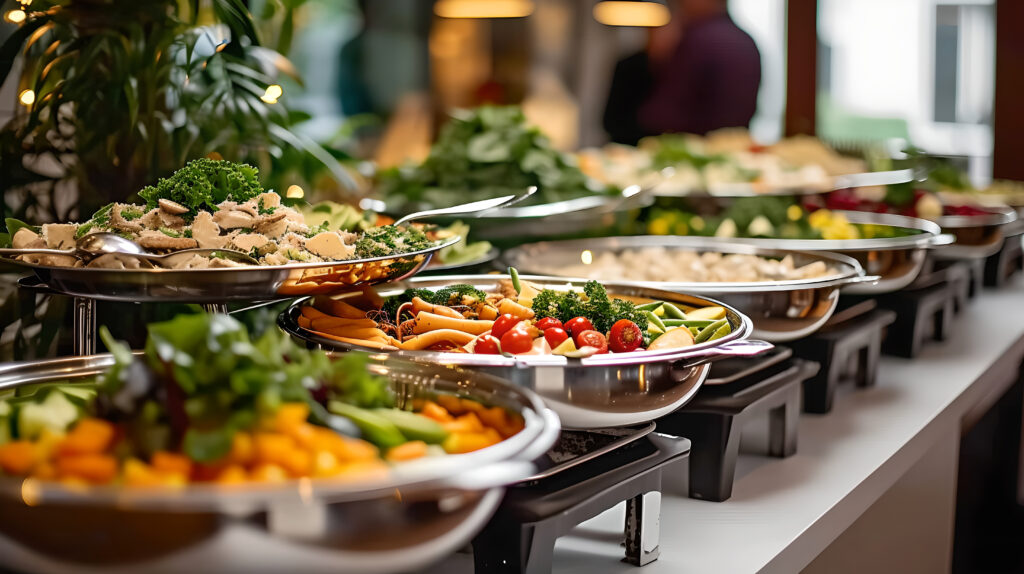
Through the event planning process, organisers should design event catering plans with the aim of reducing food waste.
One of the largest issues in this area is the over provision of catering at events. Event managers should understand how to ‘design out’ food waste, order responsibly for their events, consider reducing options on a buffet, sourcing local food, consider plant-based menus (by default), and look at how to work with their venue / caterers to manage any leftovers.
Buffets are perhaps the worst culprit as they create a lot of oversupply. There are resources to help you plan a responsible menu and plan out food waste, for instance Isla’s sustainable catering plan (accessed by their members) and blogs on avoiding food waste from responsible venues in the industry such as 15Hatfields in London, and Meet Green. Non-profit Newcastle-based BIND UK can work with venues and caterers to advise on how to responsibly plan and offer more sustainable, less waste intensive menus to their clients (fees apply).
Magic Hat Café (part of BIND UK), temporarily closed, offers external catering using surplus produce collected from independents, supermarkets, wholesalers and hospitality venues across the region – with healthy and delicious gluten-free, vegan and vegetarian options available.
Updated recycling legislation is coming into force in April 2025 across the UK that will mandate all businesses, with 10 or more staff, are recycling food waste (for micro businesses from 2027). This will apply to all venues, cafes and restaurants for events and help event planners in the UK to reduce waste from events.
Some venues will be open to allowing you to pass on surplus food from an event, to a local charity or community groups like the People’s Kitchen (Newcastle) and Salvation Army (Sunderland), but several venues, especially larger hotel chains, are tied by legislation that doesn’t allow them to send leftover food out of their building. Also charities can only accept certain items.
If the donation of leftover food from an event isn’t possible to charity and community groups, there is Olio, a food sharing community platform who can pick up packaged up hot or cold leftover food and distribute it through their community app to those wanting a meal. Venues need to sign up to be part of this and agree to maintaining food temperatures at the right level before pick up and at the point of pick up, the liability transfers to Olio. Olio have had success with this model to date and are keen to set up partnerships with event organisers, with reasonable pick up charges, and discounts for ongoing retainers, covering events across the UK.
Further reading: Meetings Today blog and webinar Food Waste: How You Can Help Lessen One of Our Industry’s Most Vexing Issues